A 40 ton gantry crane is a widely used lifting solution in steel mills, precast concrete yards, shipyards, ports, and large fabrication workshops. Its ability to handle heavy loads efficiently across open or semi-open working areas makes it a critical piece of equipment for industrial material handling.
However, selecting or evaluating a 40 ton gantry crane is not only about its lifting capacity. A range of technical parameters directly affect performance, safety, service life, and suitability for specific working environments. Understanding these parameters helps engineers, project managers, and procurement teams make informed decisions and avoid costly mismatches between crane design and actual operating conditions.
This article provides a detailed, practical explanation of the key technical parameters of 40 ton gantry cranes, why they matter, and how they influence real-world operations.
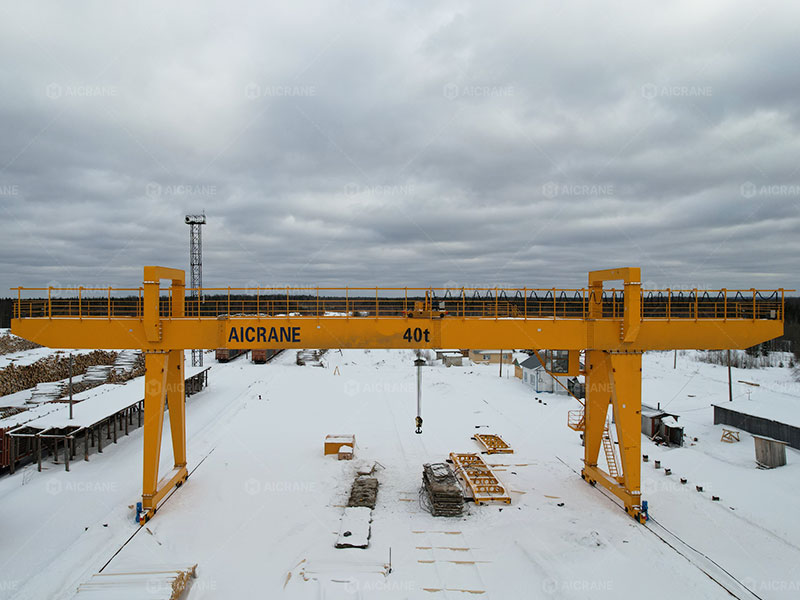
1. Rated Lifting Capacity (40 Tons)
The rated lifting capacity is the maximum load the gantry crane is designed to lift safely under normal operating conditions. For a 40 ton gantry crane, this value usually refers to:
-
The safe working load (SWL) at the hook
-
Including the weight of lifting attachments (hooks, grabs, spreaders, slings)
It is important to note that rated capacity is determined according to international standards such as ISO and FEM, which define load combinations, safety factors, and testing requirements.
Why It Matters
-
Overloading reduces structural safety and accelerates fatigue damage
-
Accurate capacity selection ensures compliance with regulations and insurance requirements
-
Different working conditions (wind, dynamic loads, synchronized lifting) may require derating
For applications involving irregular loads (steel coils, precast segments, machinery), engineers often specify a capacity margin above the nominal 40 tons.
2. Span of the Gantry Crane
The span is the horizontal distance between the two gantry legs or rails. For 40 ton gantry cranes, typical spans range from 18 m to over 40 m, depending on site layout.
Key Considerations
-
Wider spans increase bending stress on the main girders
-
Larger spans require stronger structural sections and optimized girder design
-
Span directly affects gantry crane cost, weight, and foundation requirements
In outdoor yards, the span is often determined by storage width, rail spacing, or workflow paths rather than crane limitations alone.
3. Lifting Height
Lifting height refers to the vertical distance the hook can travel from its lowest to highest position. For 40 ton gantry cranes, common lifting heights range from 8 m to 20 m, but customized designs can exceed this.
Factors Influencing Lifting Height
-
Stacking height of materials (steel plates, containers, concrete beams)
-
Clearance requirements for trucks, rail wagons, or vessels
-
Hook approach and headroom limitations
A higher lifting height increases rope length, drum size, and hoist power requirements, which must be carefully matched to the crane’s duty cycle.
4. Working Duty (Crane Classification)
One of the most critical yet often misunderstood parameters is working duty, also known as crane classification.
Under FEM or ISO standards, a 40 ton gantry crane may fall into classes such as:
-
A4 / FEM 1Am – Moderate duty
-
A5 / FEM 2m – Medium-heavy duty
-
A6 / FEM 3m – Heavy duty continuous operation
Why Duty Class Is Crucial
-
Determines motor size, gearbox strength, and braking systems
-
Directly affects fatigue life of steel structures
-
Impacts maintenance intervals and long-term reliability
For example, a 40 ton gantry crane used occasionally for maintenance lifting requires a very different design from one used continuously in a steel mill or precast yard.
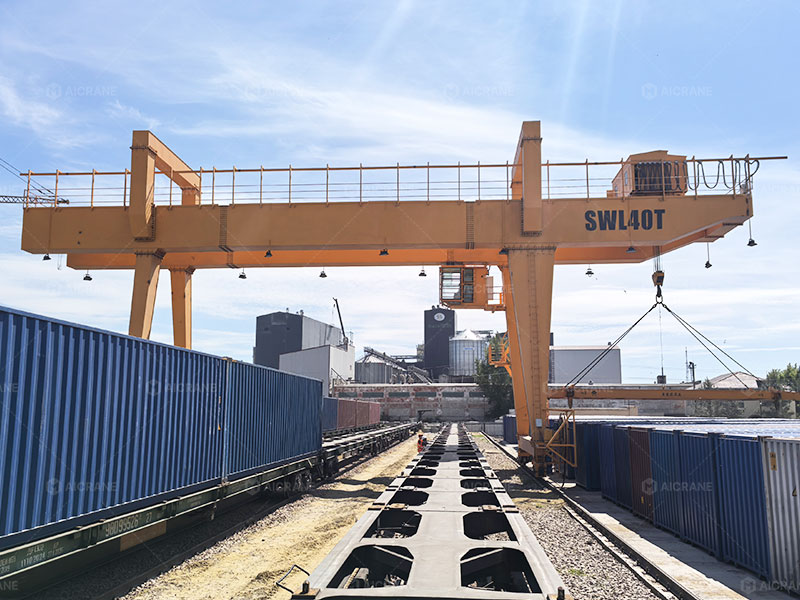
5. Hoisting Mechanism Parameters
The hoisting mechanism is the heart of the gantry crane for sale. Its key technical parameters include:
-
Hoisting speed (m/min)
-
Motor power (kW)
-
Rope reeving system (e.g., 4/2, 6/2, 8/4)
-
Brake type (electromagnetic or hydraulic)
Practical Impact
-
Higher hoisting speeds improve productivity but increase dynamic loads
-
Multi-fall reeving improves load control and reduces rope stress
-
Reliable braking systems are essential for safety during emergency stops
For 40 ton cranes, hoisting speed is often optimized to balance efficiency and precision rather than maximizing speed alone.
6. Trolley Traveling Parameters
The trolley moves horizontally along the main girder, positioning the load accurately.
Key parameters include:
-
Trolley traveling speed
-
Acceleration and deceleration control
-
Drive system type (centralized or individual drives)
Modern 40 ton gantry cranes increasingly use variable frequency drives (VFDs) to ensure smooth motion, reduce sway, and minimize mechanical shock to the structure.
7. Crane Traveling Speed
The gantry traveling speed defines how fast the entire crane moves along rails or wheels.
Typical values:
-
20–40 m/min for standard industrial applications
-
Lower speeds for precision handling or confined spaces
Design Considerations
-
Wind load resistance in outdoor environments
-
Rail alignment and foundation quality
-
Synchronization between driven wheels to prevent skewing
In rail-mounted designs, anti-skew systems are often specified as part of the technical parameters.
8. Power Supply System
The power supply system supports reliable crane operation and includes:
-
Voltage and frequency (e.g., 380V/50Hz, 415V/50Hz)
-
Power delivery method (cable reel, festoon system, conductor bars)
-
Control voltage for safety circuits
For outdoor gantry crane 40 ton, the power system must be protected against:
-
Dust and moisture
-
High temperatures
-
Voltage fluctuations
9. Control Mode
Control mode defines how operators interact with the crane. Common options include:
-
Pendant control
-
Cabin control
-
Radio remote control
Many modern 40 ton gantry cranes combine cab + remote control for flexibility and safety, especially in large yards.
Key control-related parameters include:
-
Emergency stop response time
-
Signal redundancy
-
Operator visibility
10. Structural Design Parameters
Structural parameters determine the crane’s durability and resistance to fatigue.
Important elements include:
-
Main girder type (single girder or double girder)
-
Steel grade selection
-
Weld quality and inspection level
-
Deflection limits under full load
Double girder designs are the most common choice for 40 ton gantry cranes due to better stiffness and load distribution.
11. Environmental Design Parameters
A 40 ton gantry crane often operates outdoors, making environmental parameters critical:
-
Wind load rating
-
Ambient temperature range
-
Corrosion protection level (painting system)
For coastal or desert environments, enhanced anti-corrosion coatings and sealed electrical components are typically specified.
Safety-related parameters are integral to modern crane design and include:
-
Overload protection
-
Limit switches (hoisting, traveling)
-
Emergency stop systems
-
Anti-collision and anti-sway options
These parameters ensure compliance with international standards and protect both personnel and equipment during daily operation.
Conclusion
A 40 ton gantry crane is far more than a lifting device defined by its rated capacity. Its real performance, safety, and service life depend on a comprehensive set of technical parameters, including span, lifting height, duty class, hoisting mechanisms, traveling speeds, structural design, and environmental adaptations.
By fully understanding these parameters, buyers and engineers can:
-
Match crane design precisely to operational needs
-
Avoid under- or over-specification
-
Improve safety and productivity
-
Achieve lower lifecycle costs
Whether used in steel handling, precast production, or heavy equipment assembly, a properly specified 40 ton gantry crane becomes a long-term asset that supports efficient and reliable industrial operations.